Fewer no-shows and lower costs: Optimize your service appointments with RCS
In the world of repair and installation, nothing is as costly as a no-show. A technician stands in front of a closed door, the schedule goes haywire, and the valuable capacity of your field service is wasted. For B2C service organizations, a missed appointment not only means direct costs due to a wasted trip, but also extra pressure on customer service for rescheduling.
Customers often forget their appointments, there is confusion about the time slot, or there is no easy way to reschedule at the last minute. Current email reminders are often overlooked or end up in the spam folder. RCS (Rich Communication Services) offers a practical solution: interactive, verified messages that give your customers control over their appointments and immediately reduce your no-show rate.
Why no-shows occur
Agreements in the B2C sector usually fail due to a lack of timely, clear communication. The main reasons for a closed door are:
- Forgotten: The appointment was made weeks ago and the customer has simply forgotten about it.
- Uncertainty about timing: "Will the repairman arrive at 8:00 a.m. or 12:00 p.m.?"
- Inability to resist: The threshold for calling a queue is too high.
- Unclear preparation: The customer was unaware that the workspace needed to be cleared, resulting in the appointment being canceled.
These factors lead to inefficient trips, frustrated technicians, and lower customer satisfaction. Email lacks the urgency and interactivity needed to manage this process effectively.
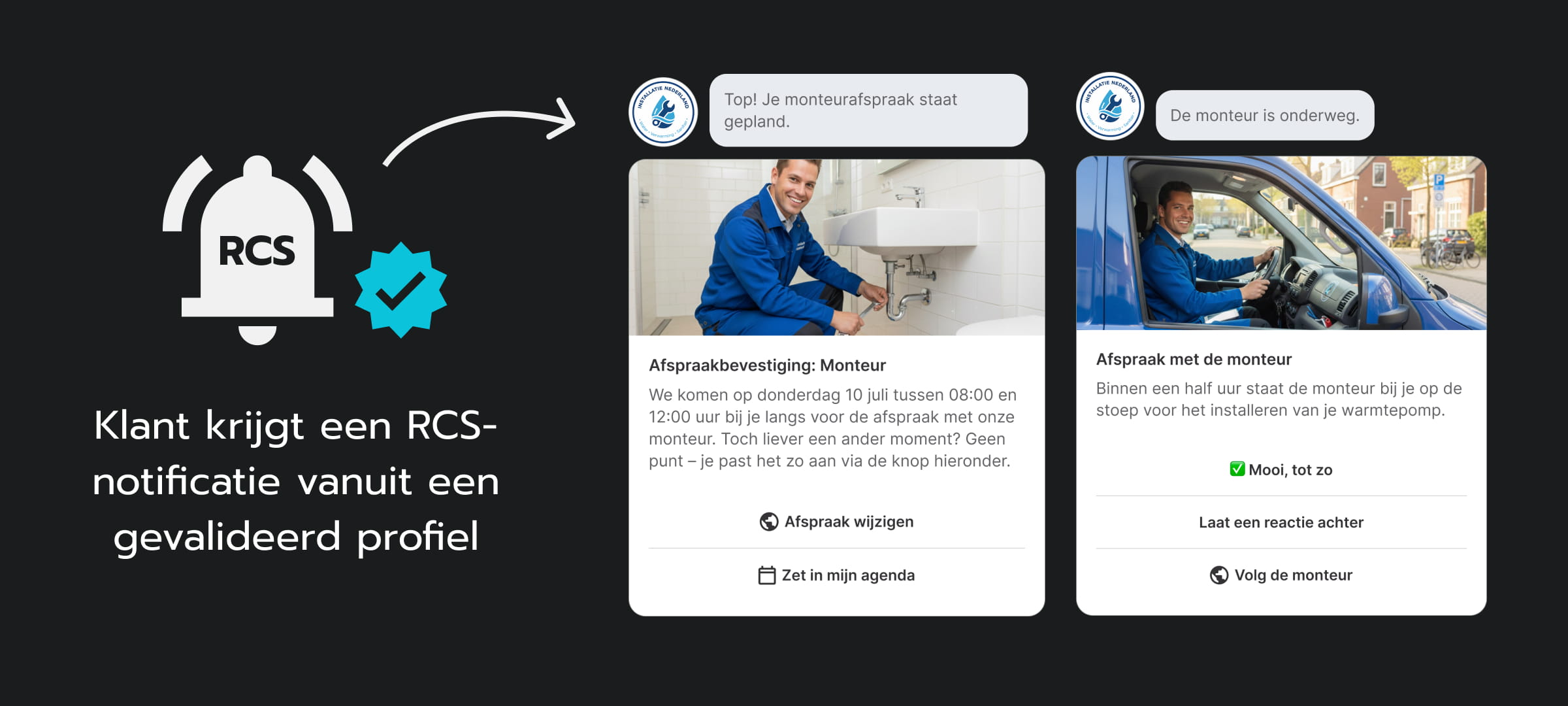
The RCS service appointment flow: From confirmation to "on the way"
1. The Booking Confirmation (Immediately after scheduling)
Confirm the details and give the customer the option to add the appointment to their calendar right away.
Content: Date, time slot, and service type.
Buttons: [Confirm], [Reschedule], [Cancel].
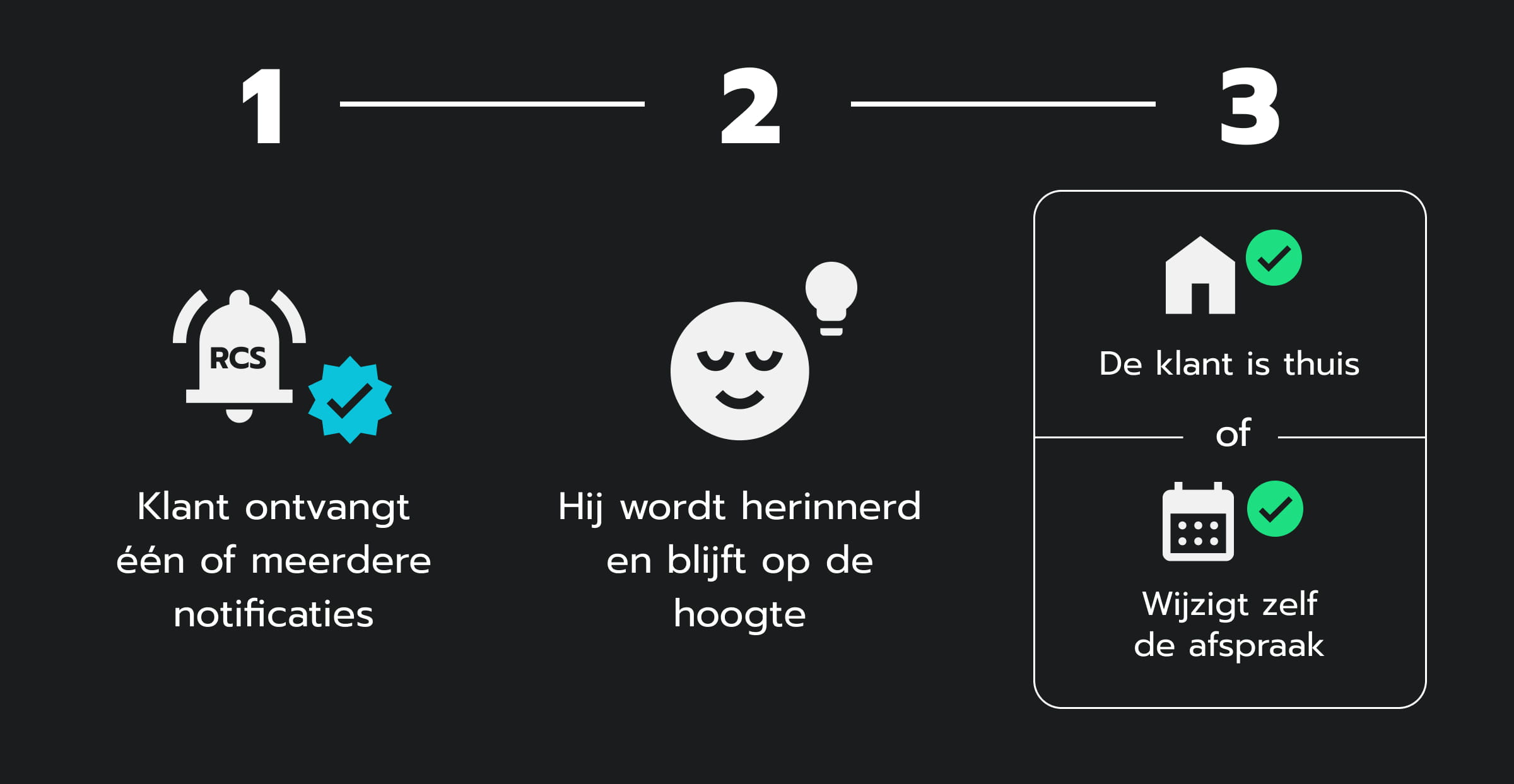
2. The Reminder (Configurable, e.g., 24 hours in advance)
Remind the customer of the appointment and provide any necessary preparation instructions (e.g., “Make sure the meter box is accessible”).
Content: Short checklist + time slot reminder.
Buttons: The same interactive options; rescheduling leads directly to a mobile webpage.
3. “Technician on the way” (Real-time status)
Reduce uncertainty on the day of the service.
Content: Current status and estimated arrival time.
Buttons: [Send instructions] or [Contact].
Measuring the benefits
At Mobile Water, we believe in results that can be substantiated. From anonymized results and UX tests at service organizations, we see the following trends:
- No-show reduction: A 12% to 20% decrease in the number of wasted trips thanks to the easy-to-use cancel button.
- CSAT increase: Customers give higher satisfaction ratings because they feel proactively informed.
- Reduced overhead: Up to 15% fewer incoming calls to scheduling for appointment changes.
Please note: Results vary per sector; we always recommend conducting your own baseline measurement during a pilot.
Real-time triggers and event-based triggers allow you to tailor the timing and content of messages to your own customer journey.
Why Mobile Water?
As a frontrunner in the Netherlands, Mobile Water helps you translate your current planning process into a modern RCS flow. We take care of the entire process: from the initial briefing and the creation of the messages to the sending and analysis of the results.
Start with a low-commitment pilot. We understand that integrating with your CRM or ERP can be daunting. That's why we keep the threshold low: we can start with event-driven triggers via API connections, without having to rebuild your entire infrastructure. You can always scale up to deeper integrations later.